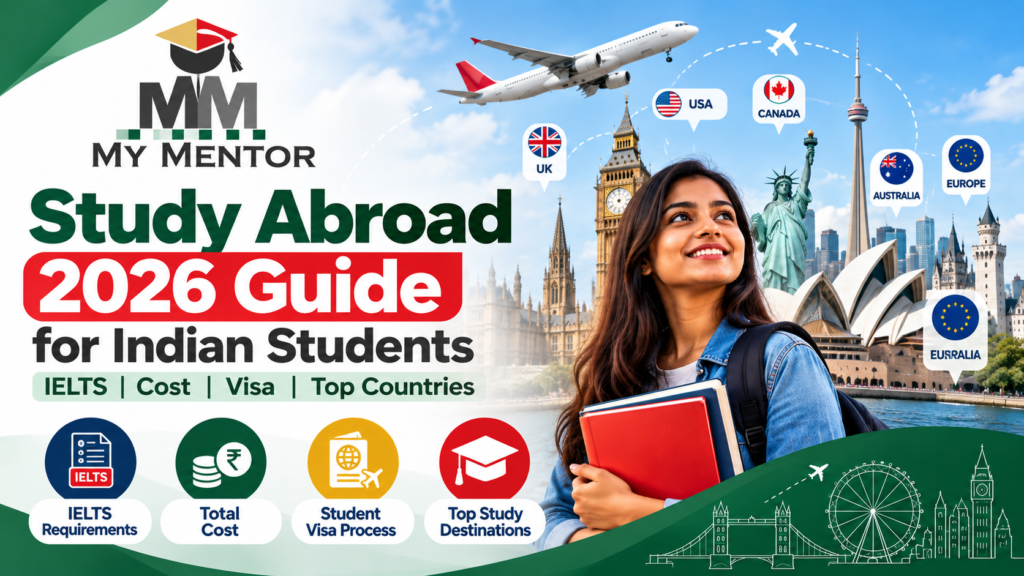
Study Abroad 2026 Guide for Indian Students | IELTS, Cost, Visa
Complete guide to study abroad in 2026 for Indian students. Learn IELTS requirements, costs, top countries, visa process, and expert tips. Study Abroad 2026 – Complete Guide for Indian Students Studying abroad in 2026 is a structured process, not a random decision. Indian students who follow a defined roadmap—country selection, IELTS preparation, application strategy, and visa execution—have significantly higher success rates. Why Study Abroad in 2026 Higher global salary opportunities Access to post-study work visas Better career growth compared to domestic degrees Strong pathways to permanent residency Indian graduates from international universities often secure salaries 2–5 times higher than local averages. Best Countries to Study Abroad for Indian Students in 2026 Canada Canada remains the top choice due to PR-friendly policies and stable job opportunities. Students get up to 3 years of post-study work permits. United Kingdom The UK offers 1-year master’s programs, reducing overall cost and time. The 2-year post-study work visa increases job opportunities. Australia Australia provides high-paying job markets and strong immigration pathways, especially in healthcare, IT, and engineering. Germany Germany is ideal for students seeking low-cost education. Public universities offer minimal tuition fees, especially in technical fields. Ireland Ireland is emerging as a tech hub with high demand for skilled professionals in IT, data science, and finance. IELTS Requirement for Study Abroad IELTS plays a critical role in admission and visa approval. Minimum requirement: Band 6 Competitive universities: Band 7+ Scholarship opportunities: Band 7.5–8 A higher IELTS score improves admission chances, visa success rate, and scholarship eligibility. Study Abroad Cost for Indian Students Average Cost by Country Canada: ₹15–30 Lakhs UK: ₹12–25 Lakhs Australia: ₹18–35 Lakhs Germany: ₹5–12 Lakhs Ireland: ₹15–28 Lakhs Costs include tuition fees, living expenses, visa fees, and insurance. Financial planning is mandatory before applying. Student Visa Process Step by Step: Shortlist course and country Clear IELTS exam Apply to universities Receive offer letter Arrange financial documents Submit visa application Attend biometrics and interview (if required) Receive visa decision Errors in documentation or financial proof are the most common reasons for rejection. How to Study Abroad from India (Step-by-Step Strategy) Step 1: Choose Career-Oriented Course Select programs based on job demand, not personal preference alone. Step 2: Target the Right Country Match country with budget, PR opportunities, and job market demand. Step 3: Prepare for IELTS Focus on scoring Band 7 or higher to maximize opportunities. Step 4: Build Strong Profile Prepare SOP, LOR, and academic documents aligned with your course. Step 5: Apply Strategically Apply to a mix of safe, moderate, and ambitious universities. Step 6: Execute Visa Process Ensure accurate documentation and financial clarity. Common Mistakes to Avoid Choosing country based on peers Ignoring post-study work options Low IELTS score Weak Statement of Purpose Applying without proper guidance These mistakes lead to visa rejection or wasted investment. Tips to Increase Study Abroad Success Rate Start IELTS preparation early Research job market before selecting course Apply to relevant universities only Maintain clear financial documentation Follow a structured application timeline Conclusion Studying abroad in 2026 is achievable if executed correctly. The difference between approval and rejection depends on planning, IELTS score, and application accuracy.